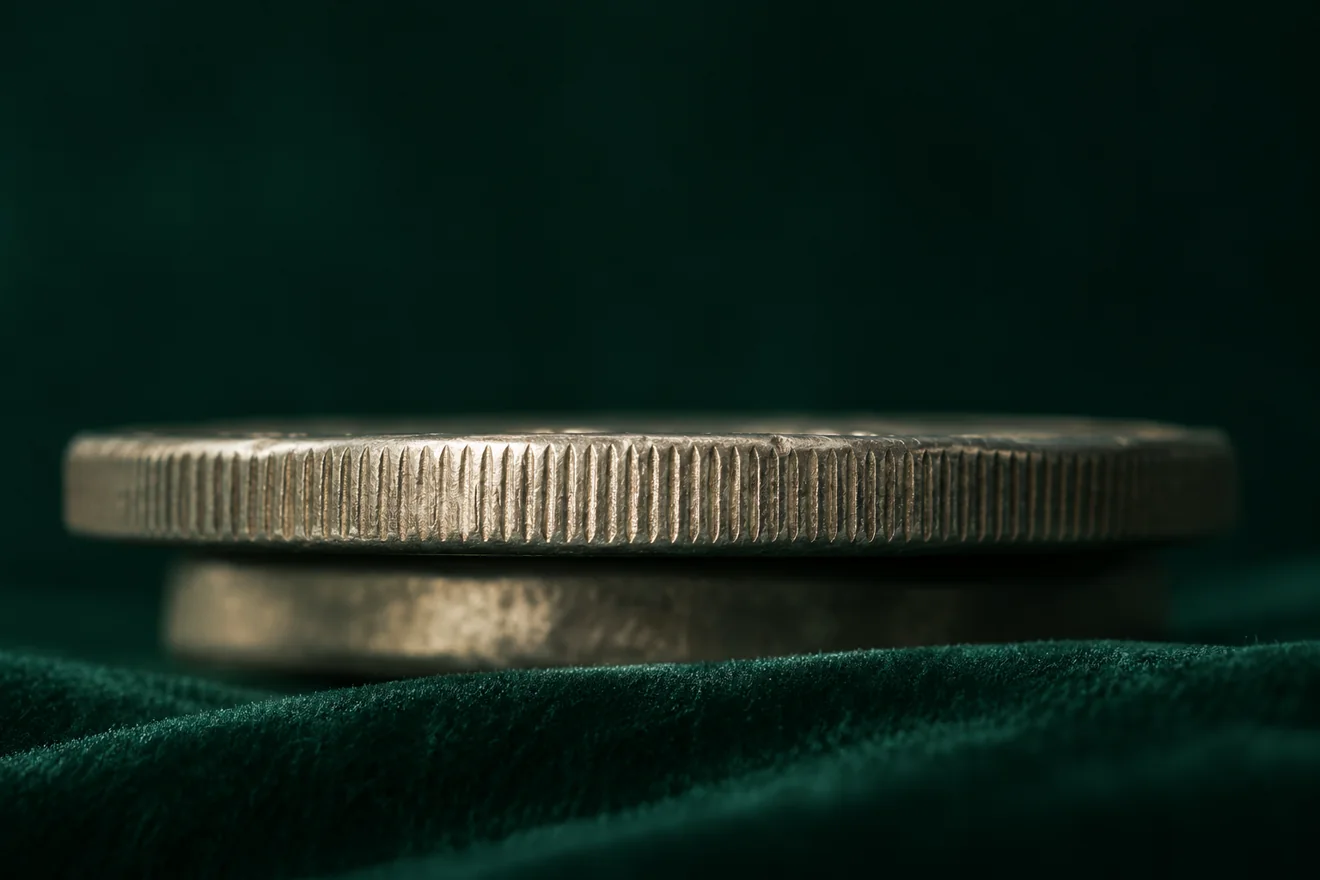
Start with a smooth edge.
Imagine paying for bread with a silver coin. Its faces look familiar. Would you notice if a sliver had been shaved from its outer edge? Someone could keep the silver and still try to spend the coin. This was called clipping.
Give the edge a pattern.
Run your thumbnail along a U.S. quarter. Those little regular ridges are called reeds. In seventeenth-century England, the Royal Mint used machinery to give precious-metal coins patterned or lettered edges. That gave people another place to check their change.
Look for an interruption.
On a patterned edge, removing metal can leave a conspicuous smooth patch. The last drawing exaggerates the gap so you can see it. On an actual coin, wear can also soften the pattern. A smooth patch alone can’t tell its history.