Give the audience something to keep.
“On holiday Dad discovered room service. Every morning he rang the little brass bell and ordered toast.” You only need one prop and one habit. Both are easy to picture.
A callback brings back a detail the audience remembers and gives it a new job in a later joke. See what happens when one family brings a hotel habit home.
Read the joke ↓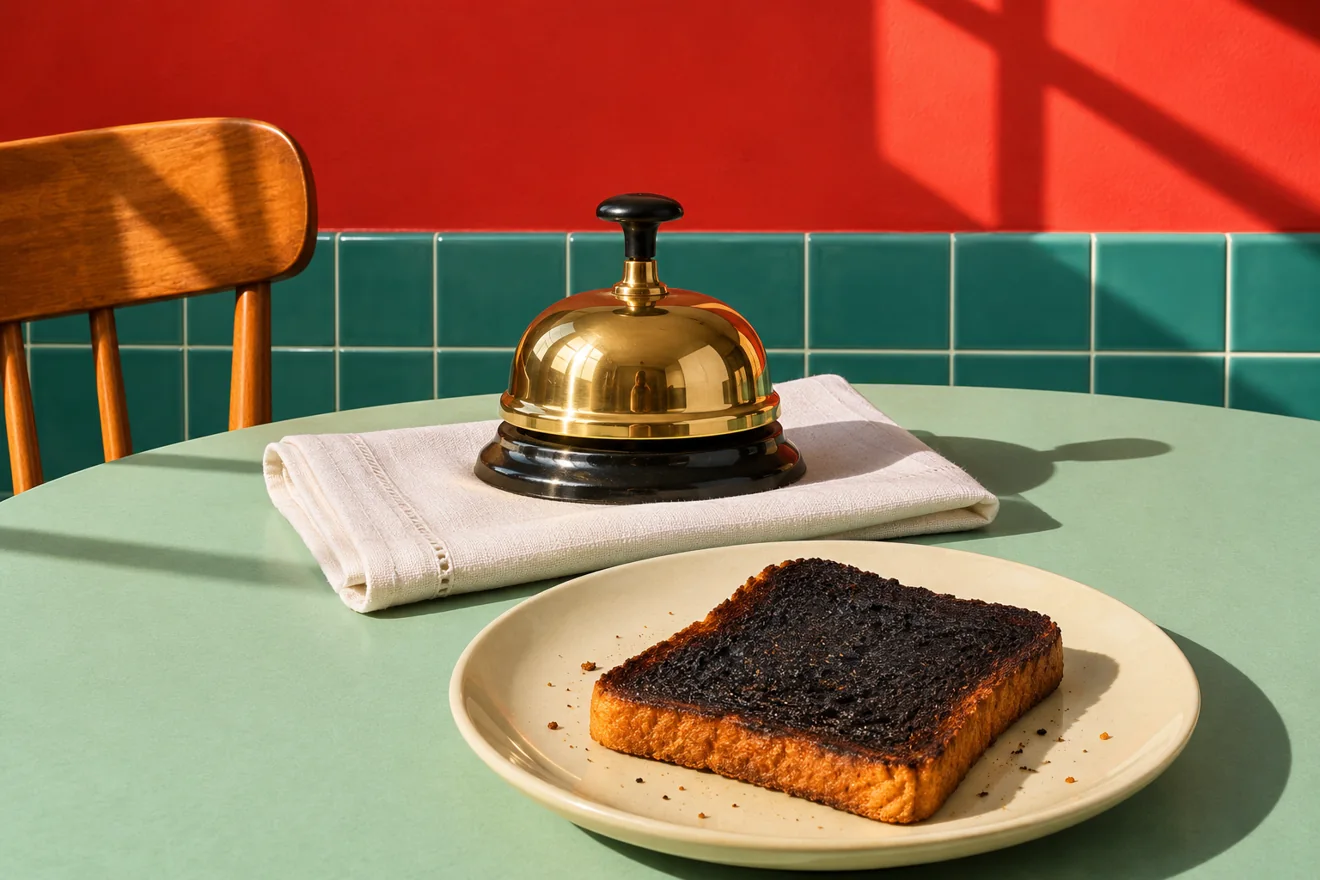
“Room service!”
A spoon taps a jam jar.
“You’re room service.”
“On holiday Dad discovered room service. Every morning he rang the little brass bell and ordered toast.” You only need one prop and one habit. Both are easy to picture.
“First morning home, Mum made coffee. Dad sat down, picked up his teaspoon and tapped it against the jam jar.” Let the audience recognize that sound on its own.
“Mum slid the toaster across the table. Congratulations, she said. You’re room service.” The first time, Dad was the customer. Now he has the job. The earlier scene lets a two-word phrase carry the ending.
At a self-checkout, the machine tells you, “Unexpected item in bagging area.” Later, you open your suitcase at the hotel and your cat looks up. What could you say?
“Unexpected item in bagging area.” The machine’s words now sound like your own attempt to stay calm. Try cutting “It reminded me of the checkout” and going straight from the cat to the line.
Another question to try How do you write a rule-of-three joke?