Start with all four suits.
Imagine a shuffled deck with no jokers. Four of its 52 cards are aces, so the chance that the top card is an ace is 4/52, or 1/13.
From a shuffled 52-card deck, the chance is 1 in 221 if you keep the first card out. Already drawn an ace? Your chance of getting another is now 1 in 17. Here’s why both answers are right.
Follow the two draws ↓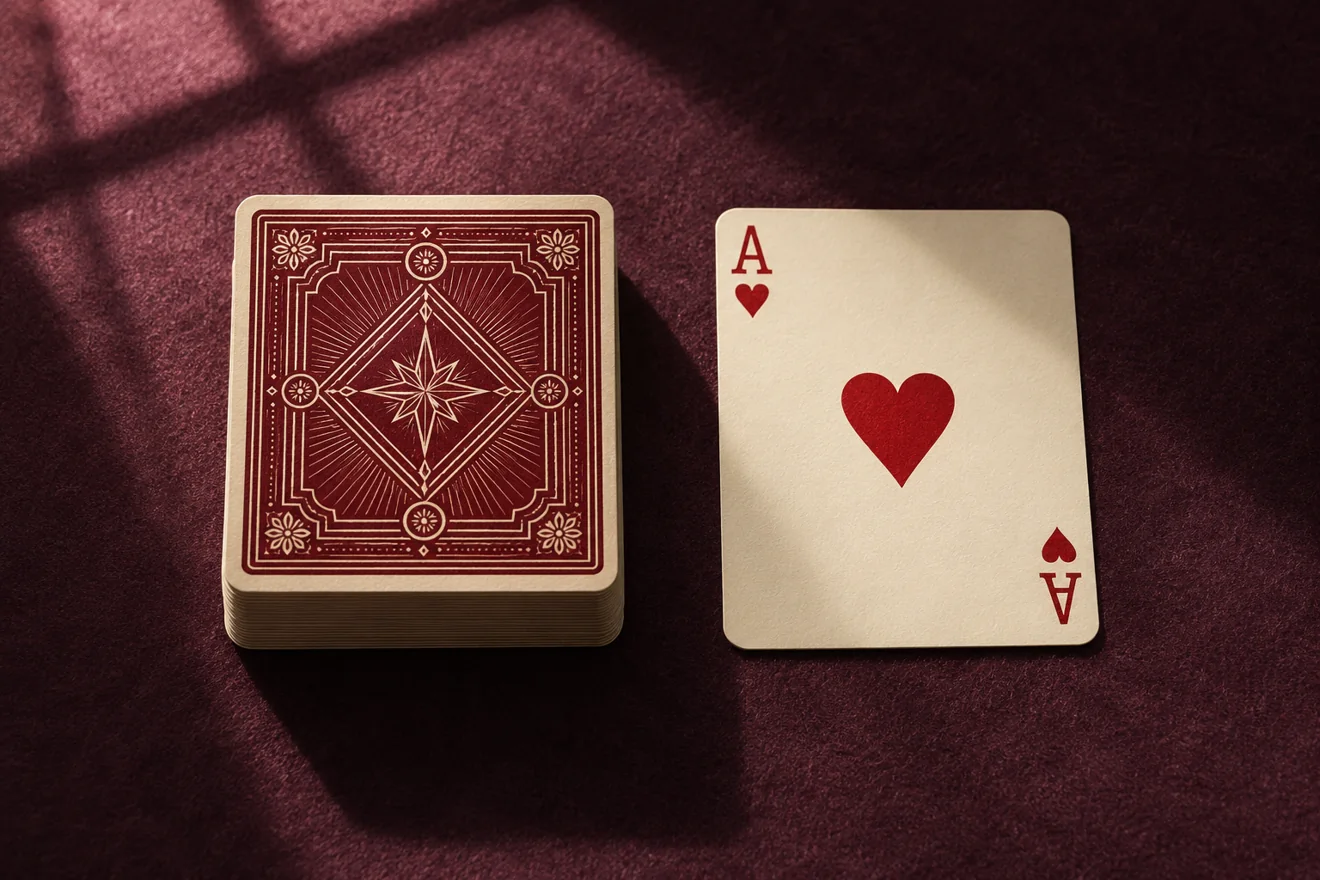
Imagine a shuffled deck with no jokers. Four of its 52 cards are aces, so the chance that the top card is an ace is 4/52, or 1/13.
Say you drew the ace of hearts. There are now 51 cards in the deck and three aces among them. Given that first ace, the chance of another is 3/51, or 1/17.
Before you turn over either card, both things have to happen. Multiply 1/13 by 1/17 to get 1/221, about 0.45%. If the first ace is already in your hand, only the second draw is still uncertain.
Leave the seven on the table. Is the next card more or less likely to be an ace than it was before you started?
Slightly more likely. All four aces are still in the deck, but there are only 51 cards left. The chance is 4/51 instead of 4/52.
Another question to try How do I build a memory palace?